Who benefits from climate finance?
Cui Bono is a governance and traceability framework that brings fairness to the heart of carbon projects, making sure the finance reaches the communities it is meant to support.

Carbon projects often promise community benefits. Few can prove how funds are used, or who decides.
Lack of transparency
Projects typically fail to report how community funds are actually used.
Broken trust
Communities often do not see or control the benefits promised to them.
Limited accountability
There is little clarity on who makes decisions about how funds are distributed.
Fairness, made traceable.
Transparent tracking
Clear visibility into how funds are allocated and spent across projects.
Shared accountability
Both project developers and communities are responsible for managing and reporting benefits.
Inclusive participation
Local communities are actively involved in decisions about how resources are shared and used.

A framework to ensure carbon finance reaches the communities it is meant to support.
Participatory governance
Communities shape how climate finance is governed and monitored. Decisions are made collectively, so local priorities guide project outcomes.
Digitally verifiable financial architecture
Every contribution is tracked through a transparent system of wallets and auditable records, making financial flows visible from source to impact.
Real-world benefit-sharing
Revenues translate into tangible improvements in livelihoods, infrastructure and resilience that communities can see, manage and verify.
Six principles that govern how benefits are shared.
Inclusivity
Communities co-design and co-manage decisions.
Neutrality
No single actor dominates; all voices matter.
Transparency
Every decision and payment is traceable.
Flexibility
Adapts to diverse contexts and technology realities.
Replicability
Scalable across regions and project types.
Verifiability
Every claim can be audited with real data.
Carbon revenues, structured into transparent wallets.
Each wallet carries clear governance rules and audit-ready records. Communities, developers and investors can trace every dollar from source to impact.

Capex wallet
Capital expenditure: infrastructure, equipment and startup costs, managed early under implementer and oversight protocols.
Carbon wallet
Holds revenues from credit sales. The central treasury for allocations to the other wallets.
Community wallet
A predefined share of revenues (for example 20%), managed through community governance to finance local priorities.
Open wallet
Operational costs: logistics, field staff, verification and project management, for predictable daily execution.
Reserve wallet
Contingency funds for risks such as issuance delays, price fluctuations or climate-related impacts.
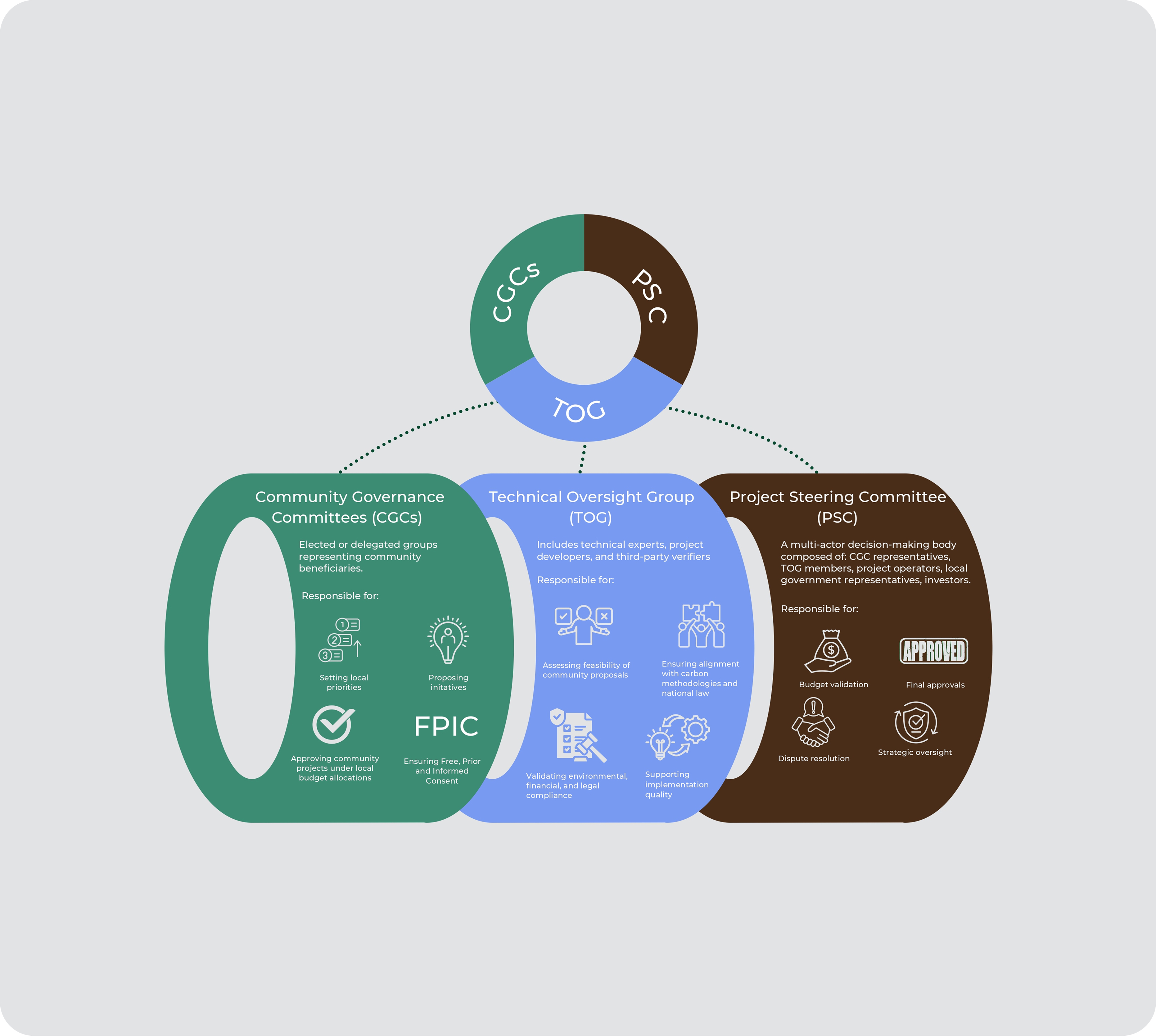
A three-layer model: community priorities, technical rigour and shared oversight.
Community Governance Committees
Local committees that represent community priorities in how benefits are governed.
Technical Oversight Group
Brings methodological and technical rigour to decisions and reporting.
Project Steering Committee
Shared oversight across the project, balancing all parties' interests.
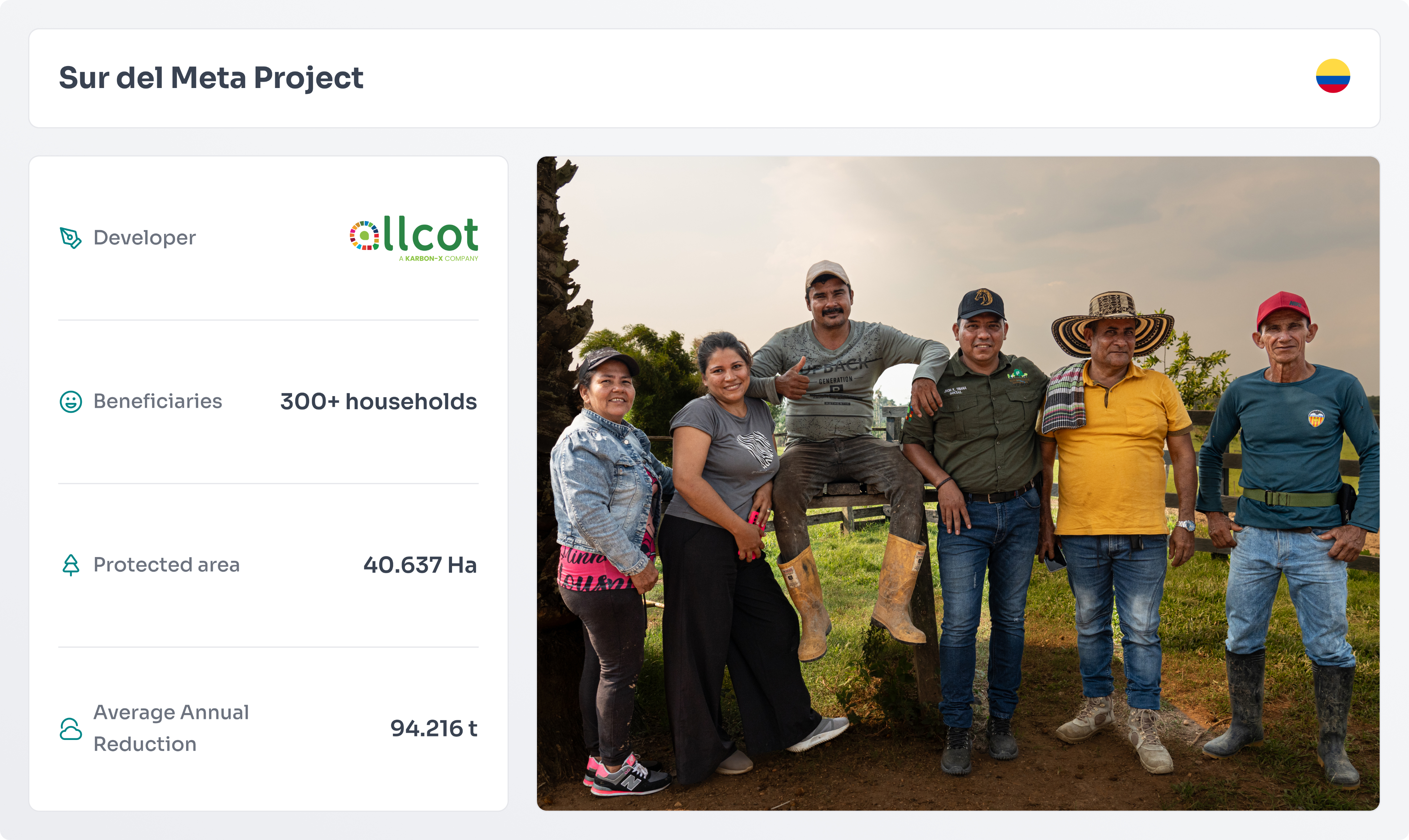
Carbon revenues backing micro-loans in Colombia.
A tentative implementation scenario, based on current planning, community consultations and expected project evolution: carbon revenues back micro-loans for families in a former conflict area.
Illustrative scenario · Cui Bono
Benefit-sharing, on the same record as everything else.
Cui Bono is partner technology Straatos integrates natively. Its governance and benefit-sharing outputs land in the Straatos project record and feed public reporting, alongside the field, spatial and monitoring evidence.
One record. Wallet allocations and governance decisions are attached to the same project the field and monitoring data belong to, not held in a separate spreadsheet.
Evidence chain preserved. Source, author and time travel with benefit-sharing entries, the same way they do for every other record.
Feeds public reporting. What a community is owed and has received can surface in transparency pages and investor reporting, drawn from the record rather than re-keyed.
Distinct identity. Cui Bono stays its own technology, with its own governance model and brand. Straatos co-presents it, the way it does Hedera Guardian and Datastake.
Ready to make carbon projects fair and transparent?
Read the Cui Bono white paper, or talk to us about how benefit-sharing works on a project running in Straatos.
Cui Bono is partner technology incorporated in Straatos. The Cui Bono name, framework, illustrations and case-study content originate with the Cui Bono team and are co-presented here.